But the young woman is carrying a large suitcase which has the word ‘Faith’ in bold letters on the side of it. She thinks to herself ‘I’ve got lots of faith, so I’ll step out onto the ice. I believe that the ice will support me.’ Is this what we think faith is? Something that, if we have enough of it, will enable us to do seemingly impossible things. The words of Jesus today could appear to imply this. Even the disciples asked that their faith be increased – as though it was important to have lots of it. Did the disciples really know what faith is?
Now imagine a similar, but significantly different scene. The same young woman is standing by the frozen pond. But this time the sign reads ‘Safe – Thick Ice’. She is holding not a great suitcase, but a mini purse and you can hardly read the word ‘Faith’ embroidered on it. But she is thinking very differently:
‘I really don’t have much faith – but I’ll use it to put my trust in what the sign says!’ Does this scene more clearly reflect what faith is? Certainly, it does help us to see that the true focus is what we put our faith in rather than faith itself (and how much of it we have).
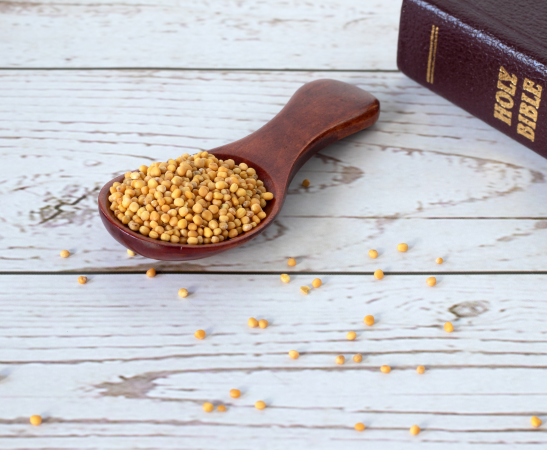
Jesus’ words seem to suggest that it really doesn’t matter how much faith we have. A grain of mustard seed is the smallest possible grain. Having the tiniest speck of willingness is enough, he said, to uproot a sycamore and plant it in the sea. So, does this mean that we can perform mighty miracles just by exercising a bit of faith? Not really! There is something unspoken in the text of the Gospel. What is it? It is the Word of God that we put our faith in. When God reveals his will, or when God speaks his Word, even the tiniest willingness to believe him will connect us to his power and we shall see his will, or his word being fulfilled. If God revealed that he wanted the sycamore uprooted, we could command it to do so, and it would. The key to faith is to know God’s will or to hear his word.